Glass Printing
Glass printing methods include screen printing, digital (UV and ceramic) printing, which are used to apply durable, high-resolution, or functional designs to glass for architectural, automotive, and industrial applications. Screen printing is ideal for bulk, opaque, and one, or max. four-colour designs, while digital techniques offer flexibility for custom, full-color, and low-volume projects.
Key Glass Printing Technologies:
Screen Printing (Silk Screening): A traditional method where ink is pushed through a mesh stencil, allowing for thick, durable ink layers ideal for high-volume, consistent production.
Digital Printing (UV-Curable & Ceramic): Utilises inkjet technology to print, offering high-resolution and complex, multi-color images. Digital ceramic printing involves firing ceramic ink into the glass for extreme durability, while UV-curable ink dries instantly.
Key Considerations for Choosing a Method:
Durability: Silk and ceramic printing are most resistant to scratches and chemicals.
Volume & Cost: Screen printing is more cost-effective for large batches, while uv- and ceramic printing is better for short runs.
Design Complexity: Digital printing allows for unlimited colours and photo-quality images without separate screen setup.
Other methods include spray coating (wet painting) for full coverage and chemical or sandblasting techniques for frosted textures.
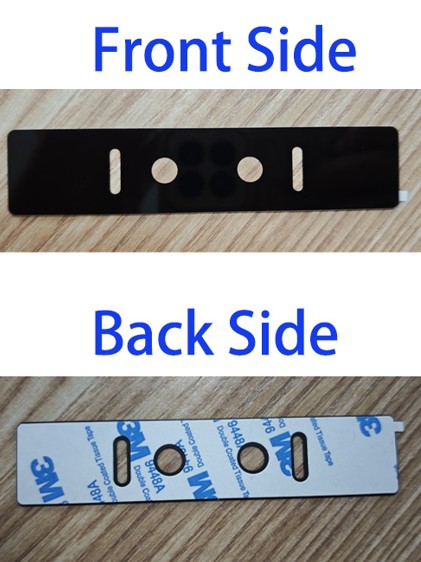
Chemically tempered silk printed 2 mm glass with backside adhesive.
Lasimyynti Tammela advises on choosing the best printing method.
We have several domestic and foreign subcontractors who can offer printing using the desired printing method.